


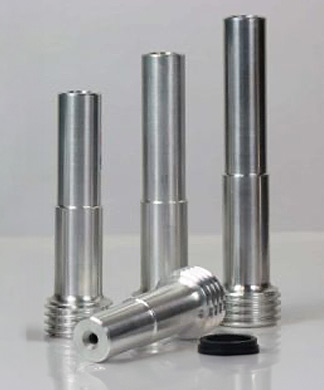
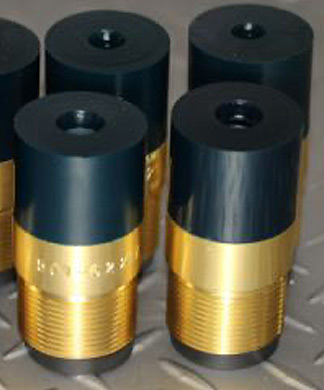














Your blast nozzle is one of the cheapest parts of your setup. A worn one can quietly become the most expensive.
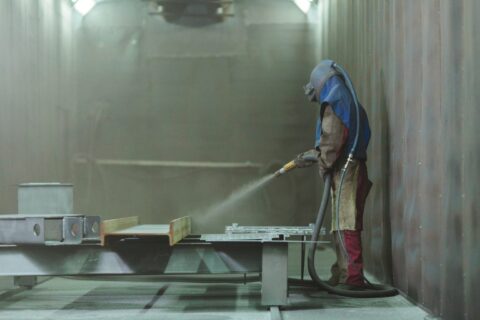
Every hour of blasting grinds the inside of the nozzle a little wider. You can’t see it from the outside, and the nozzle still “works.” But your compressor is working harder, your pot empties faster, and your crew covers less steel per day. Here’s how to check your nozzle in about a minute, and when it’s time to swap it out.
Why a worn nozzle costs you money
As the orifice wears wider, the nozzle lets more air through than your compressor was sized for. Pressure at the nozzle drops, the abrasive hits the surface slower, and the job takes longer. Industry rule of thumb: every 1 psi of nozzle pressure you lose costs about 1.5% in productivity.
The jump in air demand is bigger than most blasters expect. Nozzle numbers tell you the orifice size in sixteenths of an inch, so a #6 is 3/8″ and a #7 is 7/16″. Here’s roughly what each size uses at 100 psi:
| Nozzle size | Orifice | Air use at 100 psi (approx. cfm) |
|---|---|---|
| #4 | 1/4″ | 81 |
| #5 | 5/16″ | 137 |
| #6 | 3/8″ | 196 |
| #7 | 7/16″ | 254 |
| #8 | 1/2″ | 338 |
So a #7 nozzle that has worn to #8 size wants about 80 more cfm. If your compressor can’t supply it, pressure falls and production goes with it. If it can, you’re burning extra diesel to push air and abrasive you don’t need.
A worn nozzle hits you in four places:
- Air and fuel: your compressor runs harder to keep up.
- Abrasive: more air through the nozzle pulls more media out of the pot.
- Labor: slower blasting means more hours per job.
- Finish quality: a worn venturi spreads the pattern and can give you an uneven profile.
How to check your nozzle in 60 seconds
Always shut down and fully depressurize the blast pot before you touch the nozzle.
- Do the drill bit test. Find a drill bit one size larger than your nozzle’s original orifice. For a #6 (3/8″) nozzle, grab a 7/16″ bit. Slide it into the orifice. If it goes in, the nozzle has worn up a full size and it’s time to replace it. A nozzle wear gauge does the same job faster.
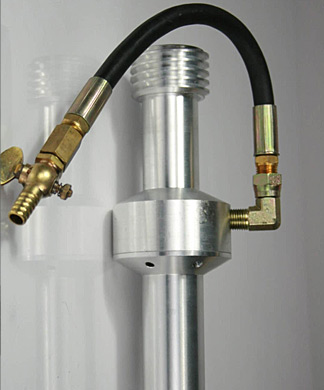
- Check nozzle pressure. Insert a needle gauge into the blast hose just behind the nozzle while blasting. If pressure is noticeably lower than it was with a new nozzle, and your compressor and hose haven’t changed, the nozzle is the first suspect.
- Look it over. Pull the nozzle and check the liner and jacket. Replace it right away if you see cracks, chips, or a liner that’s pulling loose.
Also watch for these warning signs on the job:
- The pot empties faster than it used to.
- The compressor is running harder or pressure keeps sagging.
- The blast pattern looks wider and less focused.
- You’re opening the metering valve more to get the same results.
When to replace: the 1/16-inch rule
Replace your nozzle once the orifice has worn 1/16″ larger than its original size. That’s one full nozzle number, which is exactly what the drill bit test checks for. Some high-production crews swap even sooner, at 1/32″, because air demand climbs so steeply.
Don’t wait for a nozzle to fail outright. A badly worn liner can crack or blow out, which is a safety hazard as well as a production problem.
Make it a habit:
- Measure weekly on any nozzle in regular use, or daily on big production jobs.
- Keep a spare on the truck so a worn nozzle never holds up a job.
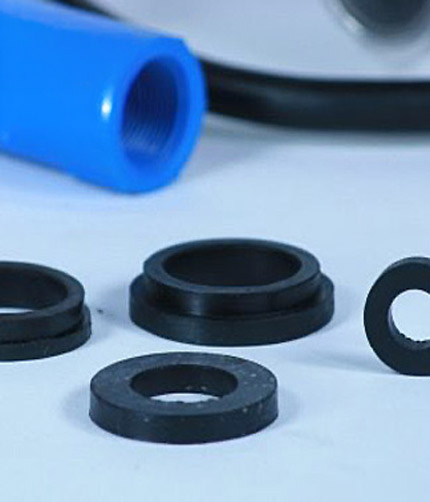
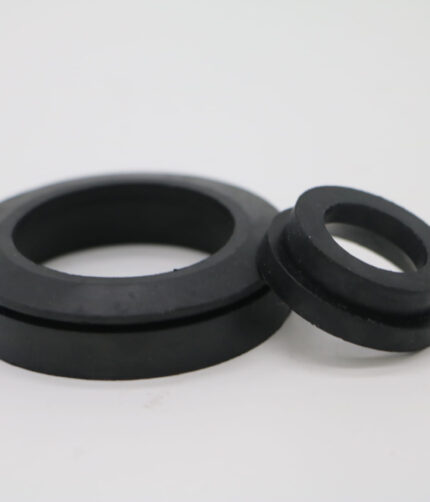
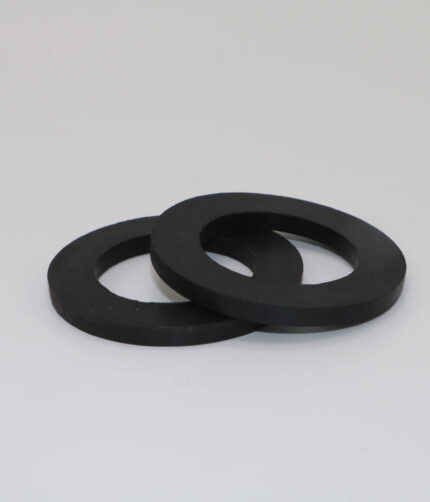
- Replace the nozzle washer every time you change nozzles. A worn washer leaks and chews up the threads on your nozzle holder.
How to get more life from your next nozzle
Nozzle life depends mostly on what it’s made of, what you blast with, and how much air you push through it. Harder, sharper abrasives like aluminum oxide wear nozzles fastest. (For a deeper look at the causes, see Blasting Nozzle Wearing Out Fast.)
| Liner material | Best for | Watch out for |
|---|---|---|
| Tungsten carbide | Everyday blasting with slag, garnet and steel grit. Tough and affordable. | Heaviest option over a long shift. |
| SiAlON | Long shifts. Wear life in the same range as tungsten carbide at a fraction of the weight. | Ceramic liner can crack if dropped. |
| Boron carbide | Aggressive abrasives like aluminum oxide. Longest wear life. | Highest price, and brittle. |
A few habits that stretch every nozzle further:
- Don’t drop it. Ceramic and carbide liners can crack on impact, even when the jacket looks fine.
- Use the right size for your compressor. Run the largest nozzle your air supply can keep at full pressure, but no larger.
- Keep your air dry. Moisture causes surging and clumping that wear nozzles unevenly.
- Rotate spares so you always know how many hours each nozzle has on it.
Replace it today, blast faster tomorrow
A new nozzle costs a fraction of what a worn one wastes in air, abrasive and labor in a single week. If yours failed the drill bit test, Blue Dog Blasting has you covered.
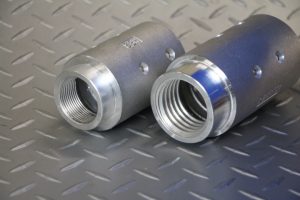
- Shop all sandblasting nozzles: 1-1/4″, 3/4″ and 50mm contractor thread
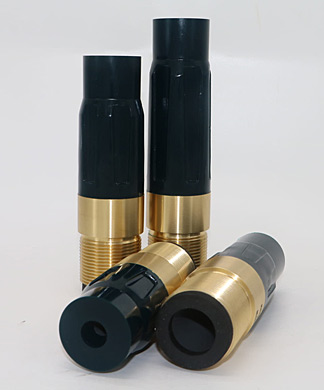
- Empire premium blast nozzles
- Nozzle washers (10 pack)
- Needle gauge for checking nozzle pressure
- Same-day shipping on orders placed by 1:30 pm EST, Monday–Friday, from Sanford, NC.
- Not sure which nozzle fits your setup? Call 910-303-1350 and we’ll help you match it to your compressor and abrasive.
Blasting Supplies and Equipment
See our complete line of Sandblasting Replacement Parts.