















Essential Blasting PPE: A Complete Safety Guide
Abrasive blasting is one of the most hazard-dense operations in surface preparation. You’re dealing with respirable silica dust, rebounding abrasive at high velocity, extreme noise levels, and potential chemical exposure from coatings you’re stripping, all at the same time. Proper blasting PPE isn’t a formality. It substantially reduces your exposure to silica, impact, and noise hazards, and OSHA and NIOSH guidance is clear that compliant protective equipment is a non-negotiable requirement for active blasting operations.
At Blue Dog Blasting, we’ve equipped crews across the country with sandblasting protective gear, and we see the same compliance gaps come up repeatedly: an operator running a blast pot without a compliant respirator, a suit worn well past its serviceable condition, or hearing protection that doesn’t meet the required noise reduction for the environment. This guide covers every PPE category you need, what the regulations actually require, and what to check before a single trigger gets pulled.
What OSHA actually requires for abrasive blasting operations
Blasting PPE requirements aren’t vague. OSHA has specific standards that apply, and understanding which ones govern your operation matters before you buy a single piece of gear.
The standards that govern blasting PPE compliance
Two standards are most directly relevant to abrasive blasting: 29 CFR 1910.94 for general industry and 29 CFR 1926.57 for construction. Both require NIOSH-approved Type CE respirators when dust concentrations exceed permissible exposure limits, and both mandate exhaust-ventilated enclosures where feasible. Beyond the respirator, 29 CFR 1910.132 requires a formal PPE hazard assessment before work begins, which drives decisions on blast suits, gloves, and boots. Occupational noise exposure falls under 29 CFR 1910.95, which sets the action level at 85 dBA and the permissible limit at 90 dBA over an 8-hour shift.
When a supplied-air respirator becomes non-negotiable
Certain conditions make a NIOSH Type CE supplied-air respirator mandatory, not optional. These include blasting with any abrasive containing more than 1% silica, working with toxic materials like lead or asbestos in the coating being removed, operating in enclosed or confined spaces, or any situation where engineering controls cannot bring exposure below permissible limits. **Standard dust masks, negative-pressure respirators, and powered air-purifying respirators (PAPRs) are not OSHA-compliant for active blasting.** PAPRs have a limited role in post-blast cleanup, but they have no place on a live blast.
Employer documentation requirements
OSHA requires employers to document exposure assessments and site hazard analyses before setting PPE requirements. Importantly, these assessments must be conducted without crediting the respirator itself as a control. A written respiratory protection program is also required under 29 CFR 1910.134, covering respirator selection, fit testing, medical evaluation, maintenance procedures, and training. If you’re running a crew, this documentation isn’t optional; it’s the foundation of a defensible compliance program. For interpretations of respirator use and enforcement guidance, see OSHA’s standard interpretation on respirator use.
Supplied-air respirators: the only compliant choice for active blasting
This is the most critical piece of abrasive blasting PPE, and it’s the one most often misunderstood or replaced with noncompliant substitutes.
Why air-purifying respirators won’t protect blasters
HEPA-filtered and air-purifying respirators simply cannot handle the dust concentrations generated during active abrasive blasting. NIOSH does not certify these devices for blasting operations, and OSHA enforcement follows NIOSH certification standards. Dust levels at a blast nozzle can reach concentrations high enough to quickly overwhelm any air-purifying filter. For the vast majority of active blasting conditions, particularly those involving silica, lead, or enclosed spaces, a supplied-air unit is the only OSHA/NIOSH-recognized option. Certain outdoor, low-toxicity applications may allow other configurations per OSHA 1910.134 guidance, but these are exceptions that require documented exposure assessment to confirm.
NIOSH Type CE respirators: what the certification actually means
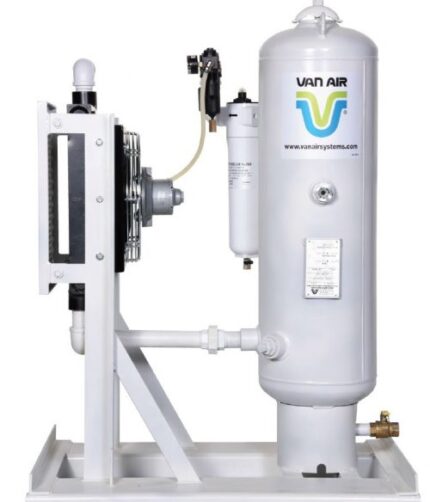
A Type CE respirator must cover the head, neck, and shoulders and supply clean air from a remote, uncontaminated source. **Continuous-flow Type CE units carry an Assigned Protection Factor (APF) of 25 for loose-fitting hoods and up to 50 for tight-fitting facepieces.** Pressure-demand Type CE units reach APF 1000 with a tight-fitting half-mask and APF 2000 with a full facepiece. For most open blasting environments, pressure-demand configurations offer the highest available protection margin. Per OSHA 1910.134(i) and 1910.94, airline filters and CO monitors are required components of any compliant supplied-air setup. Clean air means verified air, not just connected air. For detail on APFs and respirator selection, reference OSHA’s guidance on Assigned Protection Factors for Respirators.
Choosing blasting PPE: what to look for in a blasting respirator
Beyond the NIOSH certification label, evaluate these features before committing to a unit:
- Positive air pressure inside the hood at all times, which prevents dust from working in during movement
- Easy access to filter replacement without requiring tools or extended downtime
- Clear NIOSH certification labeling with the specific Type CE designation visible on the unit
- Confirmed compatibility with the blast helmet it will be paired with, consult theNova 3 technical data sheetwhere applicable, as not all respiratory hoods work with all helmet shells
Blast helmets: what separates compliant gear from a dangerous shortcut
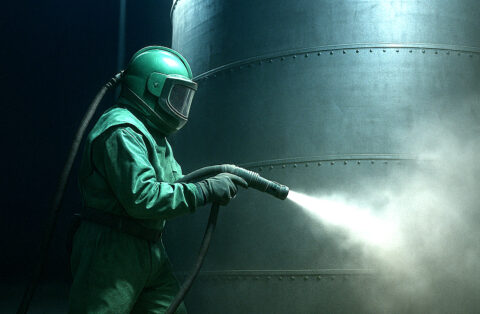
A blast helmet is not a hard hat with a visor bolted on. It’s a complete protection system that integrates respiratory delivery, impact protection, and vision in one unit.
How a blast helmet works as a complete protection system
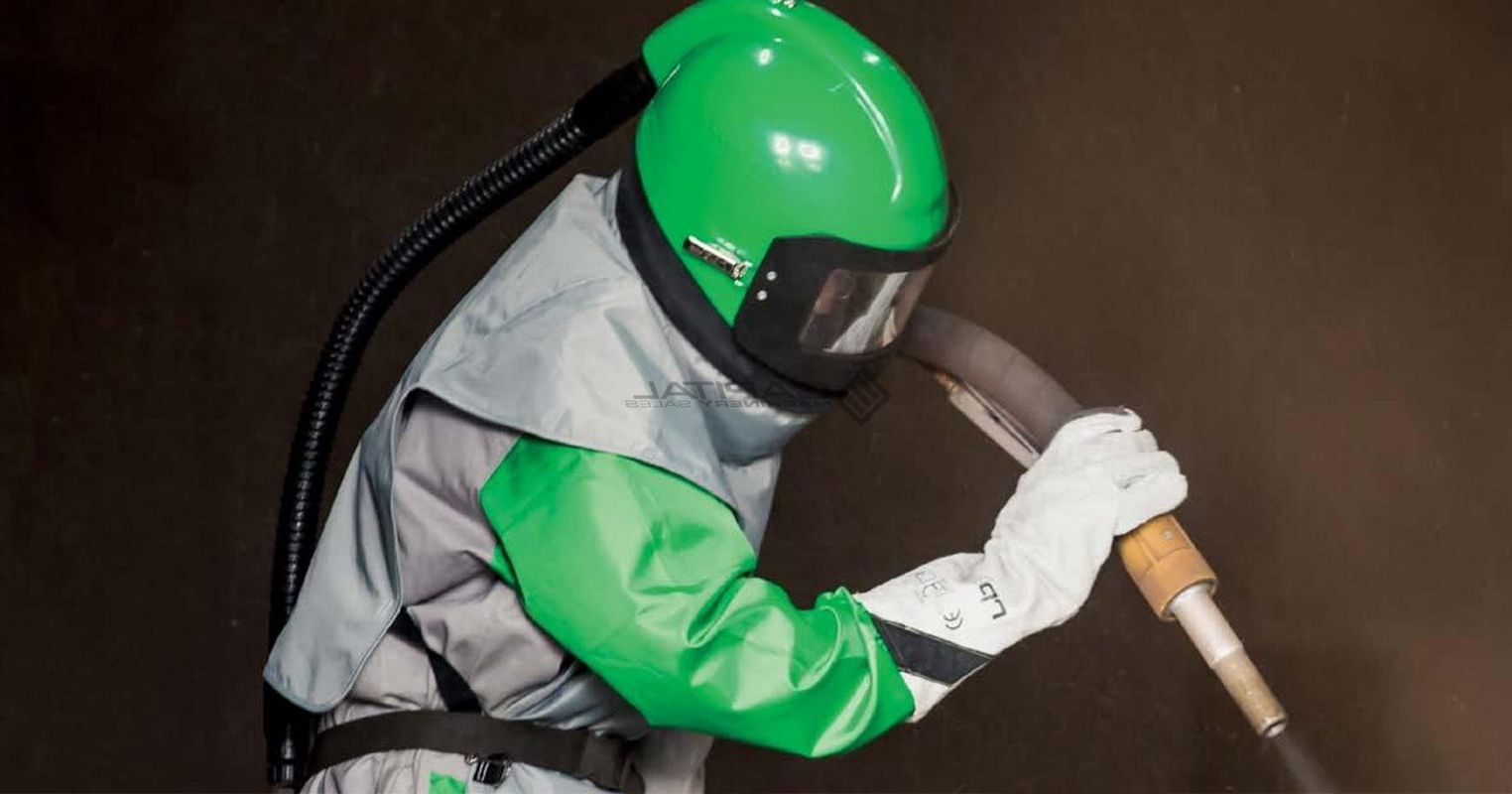
The helmet shell provides impact and abrasive rebound protection, but the cape is equally important. The cape must seal around the operator’s shoulders to prevent abrasive ingress and maintain the positive pressure delivered by the supplied-air respirator. If the cape doesn’t seal correctly, abrasive works its way in from below and the respiratory system’s integrity is compromised. The helmet and the cape/hood assembly must be evaluated as a unit, never independently.
Lens quality, visibility, and replacement design
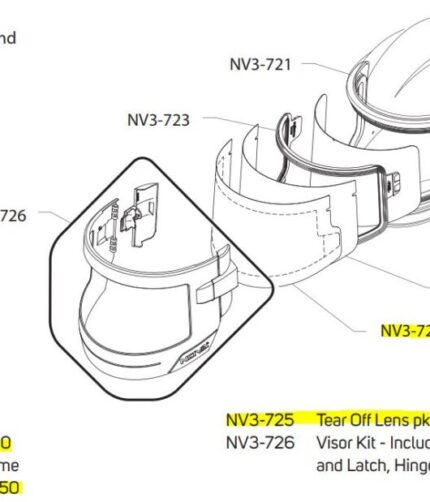
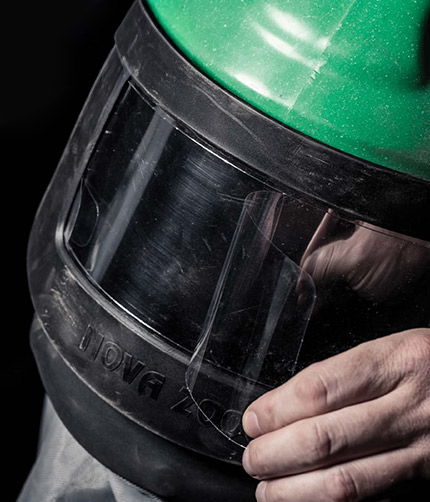
Blast helmet lenses take constant abuse. Polycarbonate lenses are standard for impact resistance, and replaceable outer lens systems are essential in high-production environments where swapping a lens mid-shift is faster than losing visibility and pushing through. **Worn or scratched lenses reduce both visibility and protection, making them a non-negotiable daily inspection item. The Nova 3 helmet is one example of a helmet built specifically for abrasive blasting environments, with a cassette lens system designed to maximize downward vision and a tear-off lens system that supports multiple lens changes per shift without stopping work, see practical guidance on Nova 3 lens replacement options and procedures.
Fit, airflow, and comfort for long shifts
Poor airflow distribution inside the helmet causes lens fogging and operator fatigue, which leads to shortcuts and unsafe behavior. A well-designed helmet distributes airflow across the visor and provides even pressure throughout the hood interior. The RPB® Nova 3, for example, uses an air deflection system that directs flow across the breathing zone and lens while exhausting used air away from the body. Proper fit at the shoulder seal prevents the hood from shifting during operation, which would break the pressure barrier and allow abrasive dust in.
Protective clothing, gloves, and footwear for abrasive rebound
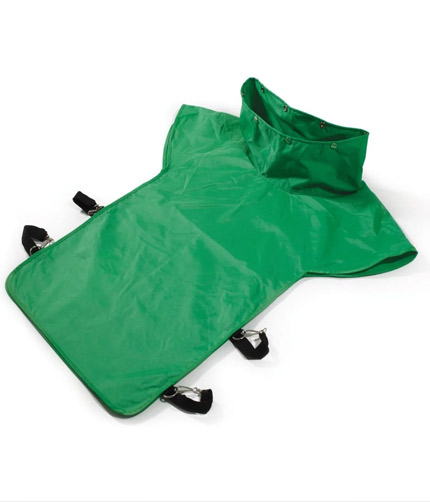
The [blast suit](https://bluedogblasting.com/shop/operator-safety/rpb-blast-suits-capes-amp-accessories/rpb-blast-suit/) and its accessories protect your body from the abrasive that bounces back from every surface you hit. Choosing the wrong material for your application isn’t just uncomfortable, it’s a protection failure.
Blast suit materials and where abrasive rebound does the most damage
Knees, elbows, and the front of the legs take the highest concentration of abrasive rebound during most blasting operations. Quality blast suits address this with heavy-duty nylon on impact zones and leather panels on the knees and elbows. The back and chest can use breathable cotton twill to manage heat buildup without sacrificing protection where it counts. For aggressive media like steel grit or aluminum oxide, options using Blastex fabric and CORDURA-reinforced panels offer meaningfully better abrasion resistance and service life. **Suit selection should match the abrasive you’re running, not just the crew’s size range.**
Sealing mechanisms that actually keep abrasive out
The most common blast suit failure point isn’t the fabric, it’s the seals. Abrasive finds its way in through collar openings, wrist cuffs, and the ankle/boot interface faster than through the outer fabric. Look for overlay flap zippers, dust-proof sports cuffs, and boot straps that prevent abrasive from tracking in at the bottom. Suits with heavy-duty hook-and-loop closures at the collar add another barrier at one of the highest-risk entry points. Any ingress of abrasive in a toxic media application creates both a skin abrasion risk and a contamination risk that extends beyond the blast zone.
Gloves and footwear requirements
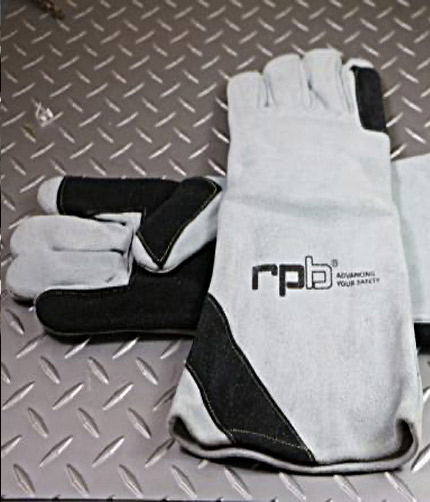
Blast gloves need abrasion-resistant outer layers and a tight cuff or bracelet system at the wrist to prevent debris entry where the glove meets the suit sleeve. Thin gloves may feel more comfortable but wear through fast and leave gaps at the cuff. Safety boots should be steel-toed with slip-resistant soles, and the leg cuff of the blast suit must be compatible with the boot’s ankle profile so the two seal against each other. Inspect both items daily for tears, holes, and wear before entering a blast zone, a pinhole in a glove is an entry point for contaminated abrasive.
Hearing, eye, and communication protection inside the blast zone
Hearing protection and communication systems are the most frequently overlooked components of a complete blasting PPE setup, and they carry real regulatory and safety consequences when ignored.
Hearing protection requirements and what NRR rating is needed
Abrasive blasting generates noise levels of 112 to 120 dBA or higher at the operator position, with peaks exceeding 140 dBA in some configurations. That’s well above the 85 dBA action level and the 90 dBA permissible limit under 29 CFR 1910.95. **At typical blasting noise levels, dual protection, earplugs plus earmuffs, is generally required to bring exposure below the permissible limit.** In-helmet hearing protection systems are the most practical solution for blasters because they integrate without interfering with the helmet’s air seal or fit. The RPB¬Æ Nova 3 carries an NRR of 7 on its own, but with added earplugs the combined NRR reaches 33, which makes it viable for most open blasting environments.
Integrated communication systems for crew coordination
Communication is a genuine safety issue in blasting operations, particularly in tanks, confined spaces, and shipyard environments where visual contact between crew members is impossible. Workers who can’t communicate reliably are more likely to remove their helmets, a well-documented hazard that exposes operators to active blast conditions and is recognized by OSHA and NIOSH as a serious risk factor. Systems like the RPB Nova Talk integrate wirelessly into the Nova 2000 and Nova 3 helmets without compromising the seal, with broad compatibility across standard radio systems. These solutions reduce the pressure to remove PPE for coordination, which is a recognized contributor to blasting injuries.
Blasting PPE inspection checklist: maintaining gear before every job
Compliant gear worn incorrectly doesn’t provide compliant protection. Donning sequence, daily inspection, and maintenance intervals all affect how well your PPE actually performs when it matters.
Pre-shift inspection: what to check before every job
Run through this abrasive blasting PPE checklist before every shift, without exception:
- Respirator hood: Check for cracks, tears, and seal integrity; verify airflow and confirm the NIOSH Type CE certification label is intact
- Helmet lens: Inspect for scratches, cracks, or discoloration that reduce visibility or compromise impact protection
- Blast suit: Examine all zippers, flaps, and cuffs; check knee and elbow panels for abrasion thinning
- Gloves and boots: Look for holes, cuts, or delamination before donning
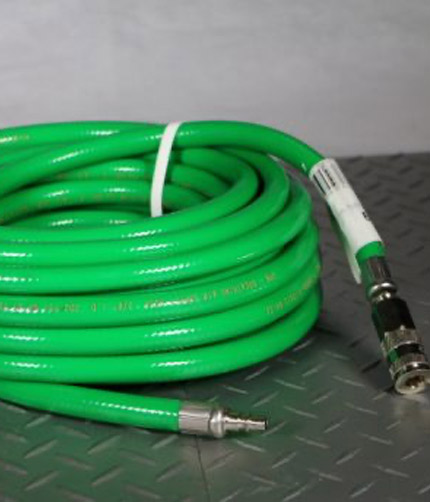
- Air supply components: Verify airline connections, filter condition, and CO monitor function before pressurizing the system
Any item that fails inspection comes out of rotation immediately. Tagging out damaged gear is not a delay, running a defective unit is the delay, measured in injury time and lost crew capacity.
Donning order and why sequence matters
The following donning sequence reflects common industry practice and manufacturer guidance for integrated blast PPE systems. Start with the suit and boots, secured and sealed at the ankles. Then put on the respirator hood, verify positive air pressure and even airflow across the lens before the helmet goes on. The blast helmet goes on over the hood, with the shoulder cape checked for full coverage and seal against the suit. Gloves go on last, with cuffs extended over the suit sleeves to close the wrist gap. **Confirm full shoulder coverage and positive air pressure before entering the blast zone.** Skipping the pressure verification before entry is the most common setup error we hear about from contractors calling in for troubleshooting help.
Blast PPE inspection and maintenance intervals
Clean non-disposable PPE components daily and store everything in a dry, clean area away from abrasive contamination. Blast helmet lenses should be replaced per manufacturer guidance or the moment visibility is compromised. Don’t wait for a visible crack to justify a swap. Supplied-air filter cartridges and airline components require regular professional inspection, and the interval should follow manufacturer specifications, not a visual damage threshold alone. Blast suits and gloves should be evaluated against manufacturer wear ratings; heavy daily use on aggressive media may require replacement well inside a standard service cycle, and visual inspection alone won’t always reveal thinning in reinforced panels.
Build your complete blasting PPE kit before the next job
Abrasive blasting is not an operation where partial PPE is acceptable. The combination of respirable silica, rebounding abrasive, and sustained noise above safe limits makes this one of the highest-consequence trades in surface preparation, and the protection system you use needs to address all three hazards simultaneously. No single piece of gear covers everything on its own.
The hierarchy is straightforward: NIOSH Type CE supplied-air respirator first, then a compliant blast helmet with a sealed cape, then a properly fitted blast suit, gloves, boots, and hearing protection verified to meet the noise levels you’re working in. Every item in that stack should be inspectable, serviceable, and compliant before the first blast of the day.
Blue Dog Blasting carries a full range of blasting PPE, including RPB¬Æ Nova blast helmets, replacement lenses, filter cartridges, and operator safety gear for operations of every scale. If you’re outfitting a new crew or replacing gear that’s past its service life, start with compliant abrasive blasting PPE and confirm that every piece can pass a daily inspection before it goes on an operator. Contact our team for product guidance on the right configuration for your application.
Blasting Supplies and Equipment
See our complete line of Operator Safety equipment.